
Plant care guide
Rebutia heliosaSunrise Crown
-
Bright light, moving air
Loves sun, but keep it airy. It’s a mountain plant, not a hothouse one.
-
Little, and careful
Tiny body, rots fast. Soak, drain, then let it dry out hard between drinks.
-
Cold-hardy dry, hates wet heat
Takes a cold dry winter well. A hot, humid, wet summer is what actually kills it.
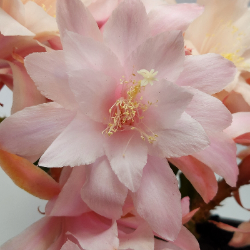
Barely bigger than a golf ball, and in spring it vanishes under flowers. The catch: no cold winter, no flowers.
Light
Rebutia heliosa comes from high in the Bolivian Andes, and it wants plenty of light — a bright sill, or outdoors in morning sun with some shade off the harshest summer afternoons. What matters just as much as the light is moving air. On a mountainside it’s never sitting in still, muggy warmth, and it resents that indoors.
Give it a bright, airy position and it stays tight and colours up. Tucked in a dim, stuffy corner it stretches, softens, and sulks — and a sulking Rebutia won’t flower.
Water
It’s tiny, and a tiny plant sitting in a small pot of wet mix rots in a hurry. Soak it through, let it drain, then let the mix dry out completely — and give it another day or two bone-dry before the next water. Through spring and summer that’s roughly weekly in warm weather, less in a cool spell.
The winter rest is not optional with this one. From autumn, cut water back to almost nothing and keep it cold. A Rebutia kept warm and watered through winter simply won’t set buds — it needs the cold, dry pause to get the signal. Kept dry, it shrugs off cold nights that would flatten a lot of cacti; what it cannot take is being wet and warm at once, which in a humid Northern Rivers summer is the fast track to rot.
A wrinkled, shrunken body just wants a drink and plumps up overnight. A body going soft, brown or glassy at soil level is rot — and for something this small, that’s usually the end of it.
Through the year
- Spring The show. As it warms and watering resumes, buds push up from around the base and open into big orange-salmon flowers that can hide the whole plant. One weak feed is enough.
- Summer Growth, and the danger season. Soak-and-dry watering, but keep it airy and out of stagnant heat — warmth plus humidity plus wet mix is the classic Rebutia killer.
- Autumn Start backing the water off as it cools, and move it somewhere it can spend winter genuinely cold and dry.
- Winter Cold and dry, on purpose. Little to no water, no heat, no feed. This is the rest that makes it flower — kept dry, it takes light frost without complaint.
When something’s wrong
Healthy, but never flowers
A green, growing plant that just won’t bud in spring. Almost always a winter that was too warm, too wet, or both — without a cold, dry rest, Rebutia don’t get the cue to flower.
What to do: nothing to fix now. Next winter, keep it truly cold and nearly dry from autumn onward, and the buds should follow.
Soft brown collapse (rot)
The little body softens and discolours at the base, usually after warm humid weather or one splash too many. It moves quickly at this size.
What to do: there’s rarely a save for the whole plant — take any firm offset as a cutting, dry it hard for several days, and start again on dry mix. The real fix is prevention: sharp drainage and airflow.
Stalled for no reason (root mealybug)
Growth stops and the plant looks tired with nothing obvious above soil. Tip it out and you find white fluff and specks all through the roots.
What to do: wash the roots clean, cut away the worst, and repot into fresh dry mix; a systemic soil drench helps in a bad case. Keep it off the shelf until it’s clear.
Soft, pale, no colour (too little light)
The body goes soft green and slightly stretched and never develops that tight, sun-baked look.
What to do: a brighter, airier spot — stepped up gradually so it doesn’t scorch after life in the shade.
Repotting & propagation
Sunrise Crown clusters slowly into a low cushion of small heads. For its size it has a surprisingly chunky root, so it’s happier in a slightly deeper pot than you’d guess — but still a small one. Over-potting leaves a big volume of mix staying wet around a tiny plant, which is just asking for rot.
Repot only every few years, into dry, gritty mix, and keep the heads sitting at or just above soil level — the buds come from low down, and burying them costs you flowers. Offsets pull away with a bit of root attached and start easily on dry mix.
Worth knowing
For such a familiar windowsill plant, Rebutia heliosa is a recent find — it wasn’t described until the 1970s, collected by the Austrian Walter Rausch in southern Bolivia. Its whole design is about efficiency: the tiny body is packed with pectinate spines (combed flat against the surface, like the teeth of a comb) to cut water loss, and the flowers are huge next to the plant because at high altitude, in a short season, there aren’t many chances to catch a pollinator — so it doesn’t do subtle.
Non-toxic. Sunrise Crown isn’t harmful to cats, dogs, or children. No concern if it’s chewed or knocked over.